
Choose a self-check for control or an agent-handled review for convenience when planning Isleworth post closing checks

You have a practical choice right after closing: walk the property and records yourself so you control what gets verified, or ask the buyer’s agent to coordinate a lighter post-sale review so you can move on faster.
Both can work. The risk is assuming the closing table caught everything. A luxury home can close cleanly and still leave open questions about permit status, association account setup, architectural approvals, irrigation settings, gate access, golf cart storage, vendor handoffs, or small property conditions that were easy to miss during the rush to close.
The best approach is usually not “agent or self.” It is deciding which items need your direct attention, which can be delegated, and which require confirmation from the right official source. This guide gives you a practical prep list for the first post-sale review, with special care around Isleworth compliance questions that should be verified through official records, the closing file, the community association, and qualified professionals.

The main tradeoff is control versus convenience
A self-check gives you more control. You choose the pace, compare records against the property, and ask specific questions before small oversights become harder to unwind. The drawback is time. You need to gather documents, contact the association, confirm permit records, and know when to bring in a contractor, attorney, surveyor, or other specialist.
An agent-handled review is simpler. A strong buyer’s agent can organize reminders, request missing documents, contact vendors, and help route questions to the title company, association, or seller’s side. The drawback is that an agent may not notice subtle community-document issues unless you ask for them directly. Agents also are not substitutes for legal, engineering, permitting, tax, insurance, or association counsel.
Self-check gives more control over details, documents, and follow-up questions.
Better when the home has recent renovations, specialty systems, exterior features, or unresolved repair credits.
Requires more effort and some comfort reading records, closing statements, and association documents.
Agent-handled review saves time and can keep communication organized.
Better when you have a trusted agent, a clean closing file, and limited time for administrative follow-up.
May miss subtle restrictions unless you give the agent a clear checklist.
For many buyers, the right answer is a hybrid. Do the first walkthrough and document review yourself, then ask the agent to help chase missing items. That keeps the judgment calls in your hands while using the agent’s process support.
Start with the records before you start with the house
The most useful isleworth post closing checks begin with paperwork, not paint, landscaping, or appliances. Records tell you what should exist. The walkthrough tells you whether the home matches that record.
Use official sources where you can. For properties in the Windermere area, do not rely only on a mailing address to determine who controls permitting or zoning. Confirm the actual jurisdiction through the parcel record and the appropriate public office.
Useful places to verify, as applicable, include:
County property records
Confirm ownership transfer, parcel details, legal description, and mailing address through the county property appraiser or other official property records source.
Recorded documents
Check recorded deeds, easements, plats, covenants, and other public records through the appropriate county recording office.
Permit records
Look for building permits, inspection status, and final sign-offs through the proper building department or permit portal. If a permit appears open, unclear, or tied to a recent project, ask a qualified permit expediter, contractor, attorney, or building department representative what it means.
Association documents
Verify current community documents, rules, assessment status, architectural review procedures, and owner registration requirements directly with the association or management company.
Closing file
Compare the settlement statement, title commitment or policy, seller disclosures, repair addenda, prorations, warranties, service contracts, and transfer confirmations.
A post-closing review is not a second negotiation unless the contract provides a path for a specific issue. Treat it first as a documentation and compliance exercise. If you find something serious, speak with the appropriate professional before assuming the remedy.

Review final permit sign-offs with care
Permit status is one of the easiest things to overlook after a polished closing. A home may look complete, but that does not tell you whether every recent project was properly closed out.
Focus on work that typically creates permit questions, such as:
Roof work
Structural changes
Pool or spa work
Window and door replacement
Generator installation
Electrical panel work
Major HVAC replacement
Additions or enclosed spaces
Outdoor kitchens or gas lines
Seawall, dock, or drainage work, if applicable
Do not assume a permit was required or not required without checking with the correct authority. Rules can vary by jurisdiction, project scope, and date of work. The safer question is: What permits exist for this parcel, and are they finaled, closed, expired, or still active?
Ask for these items during the first post-sale review:
A list of permits tied to the property for recent work
Proof of final inspection or completion status where available
Contractor information for major improvements
Warranties or transferable documentation
Any open correction notices or unresolved inspection comments
Seller-provided invoices for work represented during the sale
If you find an open permit, do not panic. Open records can exist for administrative reasons, old projects, or unresolved inspections. The point is to identify the issue early, before you start new work, make an insurance update, or plan a future sale.
Verify the association account and owner setup
Association compliance often starts with simple administration. Make sure the owner transfer has been recorded with the association, the account is active, and any closing prorations or payments landed correctly.
The closing statement may show prorated assessments, transfer-related charges, or escrowed items, but it does not always prove the association account is fully reconciled. Ask the association or management company to confirm the current status in writing.
Your first owner setup check should cover:
Owner registration
Mailing and billing contact details
Association account balance
Assessment payment method
Gate access or transponder setup
Guest access procedures
Vendor access procedures
Emergency contact information
Rules for deliveries, construction traffic, and service vehicles
Any required owner portal access
Also ask for the current version of community documents and rules. For a community such as Isleworth, visible exterior changes, landscape updates, construction activity, and other owner actions may be subject to association rules or design-review procedures. Do not rely on a neighbor’s summary or an old document in the closing packet. Verify the current process directly with the association before making changes.
This is especially important if you plan to move quickly on exterior items after closing, such as landscape revisions, paint, lighting, cameras, fencing, pool features, driveway work, or accessory structures. Even tasteful improvements can create trouble if the approval process is skipped.

Confirm golf cart storage and community-use rules
Golf cart details can seem minor until they touch association rules, gate access, garage use, charging, or neighborhood circulation. Do not assume that use, parking, or storage practices from the prior owner automatically apply to you.
Ask the association or management company to confirm the current rules for:
Where a golf cart may be stored
Whether exterior parking is restricted
Whether charging cords may be visible
Whether carts need registration, decals, or gate credentials
Who may operate carts within the community
Whether guests, vendors, or family members face different rules
Whether carts may be used on nearby public roads or only inside approved areas
For public-road use, verify the current law and local rules with the proper authority. Florida law distinguishes between golf carts and low-speed vehicles, and local road rules can matter. A community rule does not replace state or local requirements.
For the home itself, check practical details:
Charging access is safe and appropriate
Storage does not block required access points
Garage dimensions match how you intend to store vehicles and carts
Any trailer, cover, or outdoor storage plan complies with community rules
Vendor charging or maintenance visits follow access procedures
This is a good example of why a purely agent-handled review can miss nuance. A buyer’s agent may confirm gate access, but may not ask detailed questions about garage storage, charging practices, or community-specific cart rules unless you direct the review.
Walk the property with a post-closing lens
The final walkthrough before closing has a narrow purpose. It confirms the condition of the home near settlement and checks agreed repairs. A post-closing walkthrough is different. It looks for operating details, owner handoffs, compliance gaps, and missing documentation.
Bring your closing file, phone, charger, flashlight, tape measure, and a simple checklist. Photograph items with date stamps if possible. Keep the tone practical. The goal is to build a clear owner record, not to inspect every inch as if you were still deciding whether to buy.
Check these areas:
Access and security
Confirm that all keys, cards, remotes, fobs, gate credentials, mailbox keys, alarm codes, smart locks, camera accounts, garage remotes, and app-based controls have transferred. Change codes and passwords promptly. For connected systems, make sure the prior owner’s access has been removed.
Utilities and mechanical systems
Locate shutoffs, panels, filters, irrigation controls, pool equipment, generator controls, water treatment equipment, and smart-home hubs. Keep a list of vendor names and service dates. If anything is unfamiliar, schedule a system orientation with the appropriate technician.
Exterior conditions
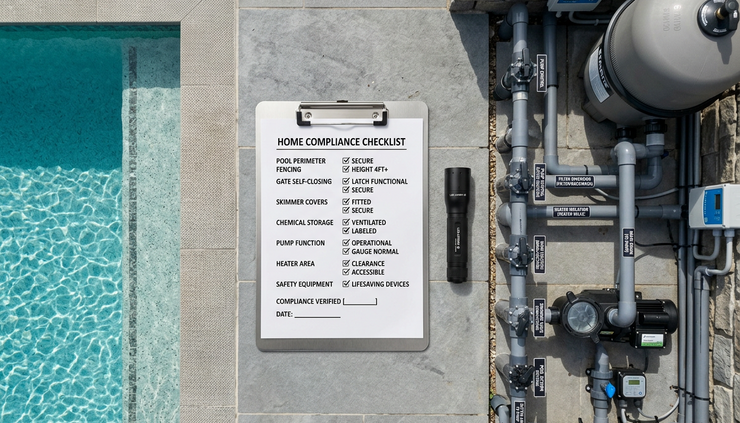
Review drainage, irrigation overspray, landscape lighting, roofline visibility, pool barriers, exterior cameras, and visible equipment. If a feature is visible from the street, golf course, lake, or neighboring property, verify whether association rules apply before modifying it.
Agreed repairs and credits
Compare the repair addendum and invoices against the completed work. If a repair credit was provided instead of completed work, note what remains undone and whether future work needs approval, permits, or licensed contractors.
Warranties and owner manuals
Collect documents for appliances, roof, HVAC, pool equipment, generator, windows, doors, smart-home systems, elevators, specialty lighting, and landscape systems. Confirm which warranties transfer and what steps are needed to preserve them.
Give the buyer’s agent a specific assignment
If you decide to rely on your agent, make the scope clear. “Can you check on everything?” is too vague. A useful post-sale assignment should name the records, people, and deadlines involved.
Send a short written request such as:
Please help coordinate the first post-closing review. I would like confirmation of permit status for recent work, association account setup, current community rules, gate and vendor access, transfer of warranties, and any golf cart storage or access requirements. Please route legal, permit, insurance, tax, or construction questions to the appropriate professionals.
That kind of note does two things. It gives your agent a practical roadmap, and it makes clear that specialized questions need specialized answers.
Ask these questions in the first week:
Which official source confirms the parcel jurisdiction and permit history?
Are there any open, expired, or unclear permits tied to recent work?
Has the association confirmed the owner account is active and current?
Are there current design-review rules for exterior changes?
Are any planned move-in projects subject to approval?
Are gate access, guest access, vendor access, and emergency contacts set up?
Are there specific rules for golf cart storage, charging, registration, or use?
Which warranties transfer, and what forms or deadlines apply?
Did any seller service contracts continue past closing?
Who should answer legal, title, survey, construction, insurance, or tax questions?
Keep all responses in one folder. Save emails as PDFs if needed. Future you will appreciate a clean post-closing file when planning improvements or preparing for resale.
A practical way to choose
Choose a self-check if the home has recent renovations, complex systems, visible exterior features, golf cart use, pending projects, or a closing file that feels incomplete. You will spend more time, but you will understand the property faster.
Choose an agent-handled review if the transaction was simple, the agent is highly organized, and you mainly need help gathering confirmations. Still give the agent a written checklist and keep final judgment calls with qualified professionals.
Choose a hybrid review if you want the best balance. Walk the property yourself, mark the questions that matter, then ask your agent to help gather documents and contact the seller’s side, title company, vendors, and association.
The first post-sale check does not need to be dramatic. It needs to be complete enough to protect your ownership, guide your next improvements, and catch compliance questions while memories and transaction documents are still fresh.
This guide is informational only. Verify property-specific issues with the appropriate building department, association or management company, title professional, attorney, surveyor, insurance advisor, contractor, or tax professional.
Own Luxury Homes® — America’s Luxury Network for fine homes, luxury properties, and significant $1M+ home decisions across the United States.
Phone: 407-900-7030
Email: ryan@ownluxuryhomes.com
Contact Ryan for Central Florida community comparisons, property-specific due diligence, and buying or selling strategy.



Comments