
Back Bay Historic Plumbing: Replace Now or Monitor First Year?

The first-year decision is simple to ask and hard to answer: replace aging pipes before they fail, or monitor them carefully and avoid opening walls too soon.
In a Back Bay home, that decision carries extra weight. Many properties are older, many are condos or brownstones with shared systems, and some work can touch historic exterior details or association rules. Replacing pipes may reduce leak risk, but it can also trigger invasive work, finish repairs, permit questions, and building coordination. Monitoring may protect cash flow after closing, but hidden corrosion, weak valves, or unknown pipe materials can turn one small leak into a bigger problem.
The better path is not “always replace” or “always wait.” It is to choose a first-year plumbing inspection plan before emotions, closing pressure, and renovation wish lists take over.
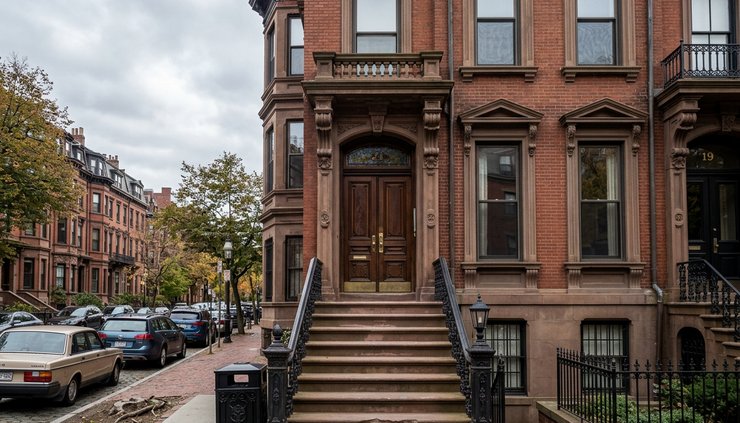
The main tradeoff is risk now versus disruption now
Replacing original or older plumbing before move-in can make sense when inspection findings show clear risk. That may include active leaks, failing shut-off valves, visible corrosion, low pressure tied to pipe condition, or past repairs that look temporary.
The benefit is clear. Work done before occupancy is often less disruptive than work done after furniture, personal items, and daily routines are in place. It also gives plumbers better access.
The drawback is just as real. Plumbing replacement in an older Back Bay property can affect plaster, tile, millwork, kitchens, baths, and shared building systems. If the property is in a condominium or co-op, approval may be needed before work starts. If exterior vents, penetrations, roof work, or façade details are involved, local review may also come into play.
Monitoring for the first year can also be rational. It gives time to understand the building, seasonal water use, pressure changes, and what repairs are truly urgent. It can preserve renovation funds for work that matters most.
The risk is that hidden failures do not wait for a convenient construction schedule. A pipe inside a wall, under a fixture, or near a shared riser may fail before the first-year plan is complete.
That is why the real question is:
Can the current plumbing be documented, tested, isolated, and monitored well enough to justify waiting?
If the answer is yes, monitor with discipline. If the answer is no, plan replacement or targeted repair before the first year gets away from you.
Start with pipe material and age
Many buyers remember to ask whether the roof leaks. Fewer ask a more precise plumbing question: What pipe materials are in the property, and how old are they?
That one question changes the whole decision.
Different materials have different concerns. Older galvanized steel may have internal corrosion and reduced flow. Copper can perform well for a long time, but age, soldering practices, water chemistry, and past repairs matter. Cast iron drain lines can crack, corrode, or develop rough interiors. Certain plastic piping may be newer, but installation quality still matters.
Do not rely on a casual comment like “the plumbing was updated.” Ask what was updated, where, when, and by whom.
A useful Back Bay historic plumbing review should separate the system into parts:
Water supply lines serving kitchens, baths, laundry, and mechanical areas
Drain, waste, and vent lines
Main shut-off and unit shut-off valves
Water heater connections and relief discharge
Fixtures, traps, visible supply stops, and flexible connectors
Shared risers or common piping in multi-unit buildings
Exterior hose bibs, irrigation, or roof deck water connections if present
If the home has partial updates, ask the inspector or plumber to identify the transition points. A property may have newer visible piping under a sink while older lines remain in walls or ceilings.
Know what Boston and the building may require you to verify
Back Bay is not just any neighborhood of older housing. The City of Boston recognizes the Back Bay Architectural District, and the Back Bay Architectural Commission reviews certain exterior work in that district. Interior plumbing replacement may not involve that review, but plumbing work that affects visible exterior elements, roof equipment, vents, penetrations, masonry, or façade details should be checked before assumptions are made.
The City of Boston also handles building and trade permitting through its Inspectional Services process. Plumbing work should be discussed with a properly licensed plumber, and permit requirements should be verified before work begins.
This guide is informational only. For a specific property, verify requirements with the City of Boston, the condo association or co-op board, the listing documents, a licensed plumber, and any attorney or design professional advising on the purchase.
For buyers deciding whether to replace or monitor, that means the inspection plan should include more than the pipes. It should also include the rules around accessing and changing them.
For a condo or co-op, review:
Master deed, declaration, bylaws, and house rules
Maintenance responsibility for pipes inside walls
Rules for plumbing shutdowns
Insurance requirements for contractors
Work-hour limits
Required board approvals
Any limits on wet-over-dry changes or fixture relocation
Past special assessments or capital planning tied to plumbing
For a single-family or townhouse, review:
Prior permits available through official records
Any historic district review questions for exterior impacts
Basement access and main shut-off location
Evidence of prior water entry, moisture, or patching
Service line information where available

Build a first-year inspection plan before you choose
A first-year plan gives structure to the replace-or-monitor decision. It also helps an agent, inspector, plumber, and attorney focus on the same risk points.
Schedule the right inspections before closing when possible
A general home inspection is a starting point, not a full plumbing diagnosis. For an older property, ask whether a licensed plumber should perform a separate evaluation.
That evaluation may include:
Visual review of accessible supply and drain lines
Fixture-by-fixture flow and drainage checks
Water pressure reading
Shut-off valve operation where safe and appropriate
Water heater and appliance connection review
Camera inspection of accessible drain or sewer lines where recommended
Review of visible patching, staining, or moisture indications
A pressure test may be appropriate in some situations, but it should only be performed by qualified professionals using a method suited to the system. Older piping can be fragile. The goal is not to stress the system carelessly. The goal is to learn whether it performs under normal and reasonable conditions.
Find every shut-off valve
This is a first-year peace-of-mind task, not a minor detail.
Ask the agent, seller, building manager, or inspector to help identify:
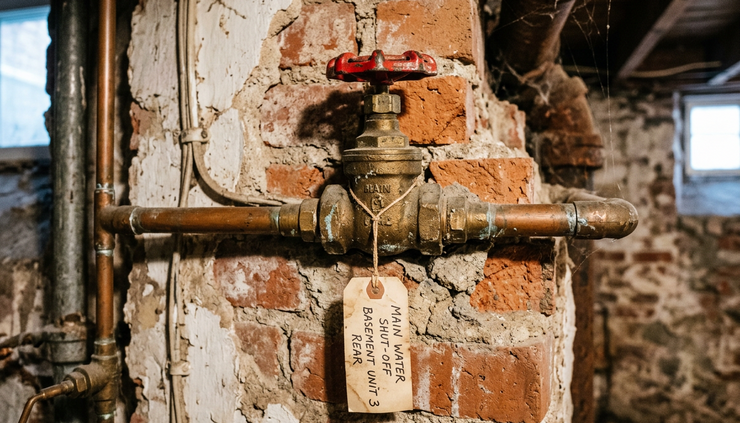
Main water shut-off
Unit shut-off valves
Fixture shut-offs under sinks and toilets
Laundry shut-offs
Water heater shut-off
Exterior hose bib shut-offs
Common area shut-offs in a condo building
Then ask which valves are safe to operate and which need replacement. A frozen or unreliable valve can turn a simple leak into an urgent building-wide problem.
If the property is part of an association, ask how emergency access works. Find out who can authorize a shutdown, where the keys are kept, and what happens after hours.
Ask about past repairs in plain language
Past repairs are not automatically bad. In many older homes, thoughtful repairs are evidence of good ownership. The concern is vague repair history.
Ask for specifics:
What leaked?
When did it happen?
What was opened to repair it?
Was the damaged material replaced or patched?
Was a licensed plumber used?
Were permits required or obtained?
Did insurance become involved?
Were neighboring units affected?
Was mold or drying work needed?
Has the same area leaked more than once?
Look for repeated mentions of the same bathroom stack, kitchen line, ceiling area, or basement wall. Repetition may suggest a system issue rather than a one-time fixture problem.
Use this checklist at the initial agent meeting
Bring this list before you tour seriously, not after the inspection window is almost over. A good agent can help request documents, frame questions, and identify when a specialist should be brought in.
Documents to request
Seller’s disclosure, if available
Prior inspection reports supplied by the seller
Plumbing repair invoices
Water heater records
Appliance installation records for laundry, dishwasher, and ice maker lines
Permit history that can be verified through official sources
Condo documents or co-op documents
Association meeting minutes that mention leaks, risers, drains, or water shutoffs
Master insurance information for multi-unit buildings
Rules for contractor access and plumbing shutdowns
Records of past water damage, remediation, or insurance claims where available
Any engineering, reserve, or capital planning reports that mention plumbing
Questions for the agent to help answer
What parts of the plumbing are believed to be original?
What pipe materials are visible or documented?
Which plumbing updates were cosmetic, and which replaced actual supply or drain lines?
Are any pipes shared with other units?
Who is responsible for pipes inside walls?
Has the building had repeated leaks or drain backups?
Are there known shut-off valves for this unit?
Are shut-off valves tested or maintained?
Would plumbing work require board approval?
Would any planned work affect exterior vents, roof areas, masonry, or façade elements?
Should the offer include access for a licensed plumber during the inspection period?
Can the seller provide repair invoices before the inspection deadline?
Are there seasonal issues tied to freezing, irrigation, roof decks, or heavy guest use?
If monitoring is chosen, what should be checked at 30 days, 6 months, and 12 months?
Questions for the plumber or inspector
Which visible pipes concern you most?
Which areas are inaccessible but worth investigating?
Is the water pressure appropriate for this system?
Are there signs of corrosion, staining, poor slope, or improper repairs?
Do any valves need replacement before move-in?
Would you recommend targeted repair, full replacement, or monitoring?
What conditions would change that recommendation?
Is a camera inspection useful for this property?
Are there signs that fixture upgrades covered older pipes?
What should be photographed now for future comparison?
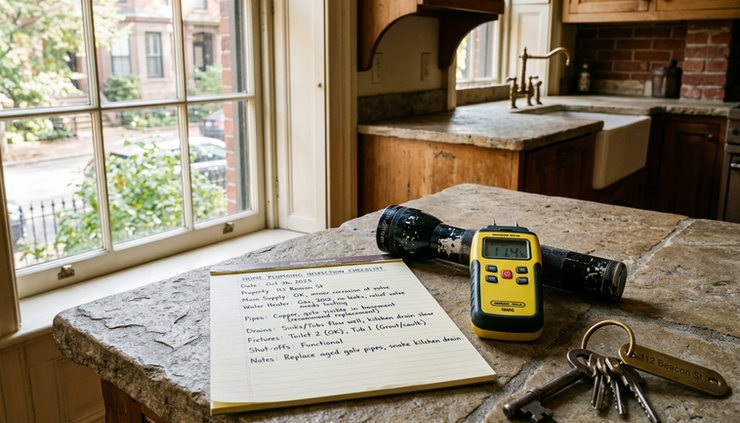
Decide with a simple risk framework
Once the inspection is complete, sort the findings into three groups.
Replace or repair before move-in
Monitor with scheduled follow-up
Investigate before deciding
Active leaks, failed shut-offs, unsafe water heater conditions, severe corrosion, repeated leak history, inaccessible high-risk piping tied to finished spaces, or plumber recommendation for immediate work
Older but stable materials, no active leaks, acceptable pressure, clear shut-off plan, manageable association rules, and documented repair history
Unknown pipe material, missing records, hidden risers, unclear maintenance responsibility, suspicious staining, slow drains, or planned renovation that may expose plumbing soon
This framework helps prevent two common mistakes.
The first mistake is replacing everything out of fear without understanding what is actually there. That can consume renovation energy before the priority list is clear.
The second mistake is waiting because nothing is dripping during the showing. Plumbing risk often hides behind tile, plaster, vanities, and fresh paint.
The best first-year plan usually includes a few non-negotiables:
Photograph visible pipes and valves before move-in
Label shut-offs
Replace unreliable fixture supply lines where recommended
Keep plumber contact information accessible
Review association emergency procedures
Check under sinks monthly during the first season
Watch ceilings below baths, kitchens, and laundry areas
Recheck pressure if use patterns change
Schedule a follow-up inspection before the first year ends
Plan for seasonal water use
Back Bay properties can feel different from month to month. Heating season, holiday guests, summer travel, irrigation, roof deck use, and freeze risk can all change water demand and exposure.
Before deciding to monitor, ask how the system performs under real life use. A lightly used guest bath may pass a showing-day test but reveal slow drainage once used daily. A laundry connection may look fine until repeated cycles begin. A roof deck hose bib or exterior line may matter only during certain seasons.
A first-year calendar can be simple:
First 30 days Confirm shut-offs, check visible connections, test fixtures under normal use, and document baseline pressure if advised.
First heating season Watch exterior-adjacent plumbing, basement areas, and spaces near unconditioned walls. Ask a plumber about winterization if any lines are vulnerable.
Heavy-use periods Check kitchens, guest baths, laundry, and disposal or dishwasher connections after increased use.
Before the one-year mark Bring the original inspection notes back to the plumber. Decide whether monitoring remains reasonable or planned replacement should move up.
The best choice is the one you can defend with evidence
Replacing original pipes now can be the right call when the evidence points to near-term failure, unreliable valves, repeated leaks, or access that is easier before move-in. Monitoring can be the right call when the system is documented, stable, testable, and supported by a clear emergency plan.
What should not happen is drifting into the first year with unclear pipe materials, no shut-off map, no plumber’s opinion, and no record of past repairs.
For a Back Bay historic property, peace of mind comes from asking better questions early. Start with material and age. Confirm who controls the pipes and who approves the work. Verify permit, association, and historic district questions with the proper professionals. Then choose replacement, targeted repair, or monitoring based on the building in front of you.
Own Luxury Homes® — America’s Luxury Network for fine homes, luxury properties, and significant $1M+ home decisions across the United States.
Our local real estate agents help buyers and sellers in your market.
Phone: 407-900-7030



Comments