
Scottsdale AZ Desert Landscaping vs Turf for Luxury Homes Buyer Checklist

You are choosing between two very different first impressions: a layered desert garden that feels custom and resort-like, or low-maintenance turf that keeps the property visually clean without asking much from the owner. In Scottsdale, that choice is not only about taste. It can affect water use, weekly maintenance, future renovation plans, and whether the HOA will approve what you want to do.
The simple answer is this:
Choose desert landscaping when the home’s outdoor identity matters and you are willing to manage irrigation, pruning, seasonal cleanup, and plant health. Choose turf when the space needs to be useful, simple, and predictable, but verify whether it is living turf or synthetic turf, and whether the HOA and water provider allow the setup you expect.
The mistake many luxury buyers make is waiting until after escrow to ask about irrigation rules. By then, the garden may look beautiful, but the maintenance contract, water bill pattern, backflow equipment, plant restrictions, or HOA limits may tell a different story.

The real choice is beauty, use, and control
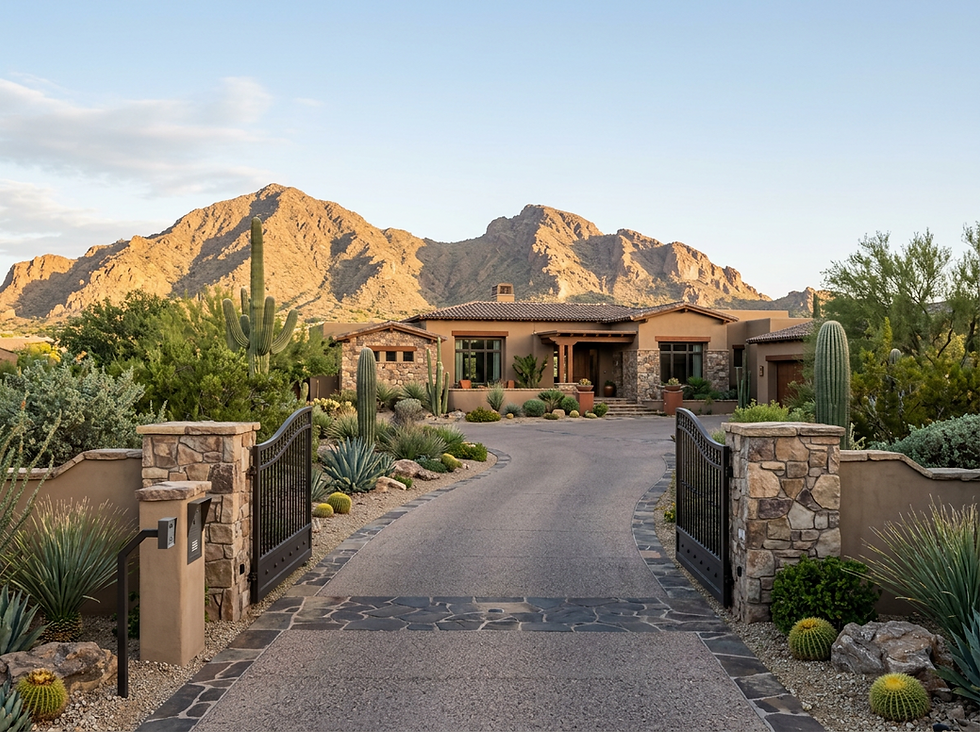
A mature desert garden can make a Scottsdale home feel established from the moment the gate opens. Saguaros, specimen agaves, boulders, decomposed granite, accent lighting, and native trees can create a sense of place that turf alone rarely delivers.
That beauty comes with decisions. Irrigation zones need to match plant needs. Trees need pruning at the right time. Gravel needs refreshing. Desert plants can still fail if they are overwatered, planted poorly, or exposed to reflected heat from walls and hardscape.
Low-maintenance turf has a different appeal. It gives the eye a calm, green plane. It can work for pets, children, putting areas, or a clean transition from pool to patio. If synthetic, it can reduce irrigation in that specific area, though it still needs cleaning, heat management, and eventual replacement. If living turf, it may need far more water than a desert-adapted landscape.
Before choosing, define what “turf” means in this particular yard.
Is it synthetic turf?
Is it natural grass?
Is it a putting surface?
Is it a small accent panel?
Is it replacing existing planting?
Is it allowed in the front yard, rear yard, or both?
That clarity changes every next question.
What Scottsdale buyers should verify before falling in love with the yard
Scottsdale is not one uniform landscape rulebook. A home may sit in a master-planned community, a custom-home enclave, a gated golf community, or an area with more site-specific design review. Some neighborhoods have strict architectural and landscape standards. Others leave more room for owner choice.
City review can also matter. Official City of Scottsdale materials identify local review topics such as native plant protection and Environmentally Sensitive Lands standards in certain contexts. That does not mean every backyard planter change triggers the same process. It does mean buyers should verify before assuming mature desert plants, grading, drainage, or major landscape changes are free to alter.
For a luxury purchase, treat the landscape like another system of the home. You would not ignore the roof, pool equipment, or HVAC. Do not ignore the irrigation clock, valves, plant palette, drainage, and HOA approval history.
Ask for documents before closing whenever possible. A beautiful yard without records can still be manageable, but it gives you less certainty.
Desert landscaping gives the home a Scottsdale identity
The best Scottsdale AZ desert landscaping does not look sparse. It looks edited. It uses shade, texture, stone, lighting, and water-wise planting to create depth without pretending the property is somewhere else.
A strong desert garden may include:
Native or desert-adapted trees for filtered shade
Agaves, aloes, yuccas, cactus, and flowering shrubs
Boulders and natural stone that match the site
Decomposed granite or gravel in colors approved by the HOA
Low-voltage lighting that highlights structure, not clutter
Drip irrigation separated into smart zones
Space around plants so they can grow into the design
The main advantage is character. Desert planting can complement modern, territorial, Mediterranean, and contemporary Southwest architecture. It can also reduce the amount of irrigated green surface compared with living lawn.
The tradeoff is maintenance that requires judgment. A desert garden is not “no maintenance.” It needs the right maintenance.
Watch for these conditions during a showing:
Plants pressed too close to walls or windows
Irrigation spray hitting stucco, stone, gates, or hardscape
Dead branches, sun-scorched plants, or salt buildup
Gravel washed into drains or low spots
Tree roots lifting pavers or pool decking
A single irrigation zone serving plants with different water needs
Mature cactus or specimen plants with no clear ownership or care plan
A high-end desert garden can be worth preserving. It can also become expensive to correct if the wrong plants were placed in the wrong microclimate.

Turf can be smart when it has a specific purpose
Turf works best when it solves a real use case. A small lawn panel off the kitchen, a dog run, a children’s play area, or a putting surface can make daily living easier. Turf becomes less convincing when it fills space only because the yard lacked a stronger design idea.
Synthetic turf can reduce watering for that zone, but it is not maintenance-free. It can hold heat, collect debris, need brushing, require odor control in pet areas, and age over time. Installation quality matters. Poor base preparation can lead to ripples, drainage problems, or edge failure.
Living turf has its own questions. It can be more comfortable underfoot and cooler than some artificial surfaces, but it usually needs irrigation, mowing, fertilizing, and seasonal care. In Scottsdale, that water demand deserves serious review.
Turf can look plain when it is shaped like a leftover rectangle. It looks better when it is intentional.
Good turf placement usually has:
Clean geometry that matches the architecture
Defined borders in stone, steel, concrete, or pavers
Shade planning for comfort and plant health
Drainage away from structures and pool decks
Separation from desert planting zones
HOA approval in writing before installation
If the yard already has turf, ask whether it was approved, whether it drains properly, and who installed it. If the seller cannot answer, the inspection period should include a landscape and irrigation review.
Compare the tradeoffs before you decide
Elaborate desert garden
Best when the home needs a strong Scottsdale sense of place, layered curb appeal, and a resort-style outdoor experience.
Main benefit
Texture, shade, seasonal interest, and a design that feels tied to the desert setting.
Main risk
Poor irrigation design, plant stress, pruning needs, and higher-skilled maintenance.
Best buyer question
Who designed it, who maintains it, and are the irrigation zones matched to the plants?
Low-maintenance turf
Best when the yard needs a simple usable surface for pets, play, putting, or a clean visual break near the pool or patio.
Main benefit
Predictable appearance and practical use, especially in small areas.
Main risk
Plain appearance, heat, drainage concerns, HOA limits, or water use if it is living turf.
Best buyer question
What type of turf is it, who approved it, and what care does it require?
Ask the landscaper these questions
A landscape professional can turn a pretty yard into a readable system. During due diligence, ask for a walk-through that covers plant health, irrigation, drainage, and near-term maintenance.
Use these questions:
Which plants are native, desert-adapted, or high-water-use?
Are any plants stressed, declining, diseased, or poorly located?
Which plants should be removed, relocated, or replaced within the next few seasons?
Are any saguaros, mature native trees, or specimen plants subject to special handling rules?
Has the irrigation system been mapped by zone?
Do the irrigation zones separate trees, shrubs, cactus, pots, turf, and seasonal color?
Is the controller smart, manual, weather-based, or outdated?
Are there leaks, clogged emitters, broken valves, overspray, or pressure issues?
Does water drain away from the house, casita, retaining walls, pool, and outdoor kitchen?
Is the turf synthetic or living?
If synthetic, what is the base material, drainage design, edge restraint, and expected care routine?
If living, what irrigation schedule and maintenance does it require?
What would a monthly or seasonal maintenance contract include?
Who handles tree pruning, irrigation repairs, fertilization, pest issues, and storm cleanup?
Are lighting fixtures, transformers, pumps, or water features included in the maintenance scope?
Ask the landscaper to separate must-fix items from preference items. A dead shrub is not the same problem as faulty drainage toward the foundation.
Ask the HOA these questions
The HOA may matter as much as the design itself. A luxury home can have an impressive yard and still be out of step with current community standards, especially if prior work was done without approval or if the rules changed.
Ask for the governing documents, architectural guidelines, landscape standards, and any approval history for the property. Do not rely only on a verbal answer.
Key HOA questions include:
Are front yard and backyard changes reviewed differently?
Is synthetic turf allowed?
Is living grass allowed?
Are there limits on turf area, location, color, pile height, infill, or visibility from the street?
Are certain gravel colors, boulder types, plant species, or edging materials required?
Are there minimum planting standards for front yards, courtyards, view fencing, or street-facing areas?
Are dead plants required to be replaced within a certain time?
Are seasonal flowers required, optional, or discouraged?
Are landscape lights regulated for brightness, color, shielding, or hours?
Are there rules for drainage changes, retaining walls, pots, screens, or raised planters?
Has the current yard received written approval?
Are there open violations or pending notices?
What is the process and timeline for approval if the buyer wants to change the yard after closing?
For gated and master-planned communities, also ask whether there is a separate design review committee. The HOA manager may not be the only approval authority.

Ask the water utility these questions
Water service is not always the first thing buyers think about when touring a luxury yard, but it should be part of the decision. The City of Scottsdale has official water conservation resources, and homes within its water service area may have utility-specific guidance for efficiency, irrigation, and water use. Some properties may receive service through another provider, so verify the actual utility for the address.
Start by asking who provides water service, then ask how the irrigation system is connected and billed.
Important questions include:
Who is the water provider for this address?
Can the seller provide recent water bills for high-use and low-use months?
Is irrigation connected to the domestic water meter or a separate meter?
Is there a backflow prevention device serving irrigation, pool fill, or other outdoor systems?
Who owns, tests, maintains, and repairs that equipment?
Are there current alerts, violations, or required repairs tied to outdoor water use?
Does the utility offer irrigation checkups, conservation resources, or rebate programs?
Are there watering schedules, drought guidance, or conservation rules that affect turf or overseeding?
Does the property have a smart irrigation controller, rain sensor, or flow sensor?
Are pool auto-fill, water features, misters, turf, and planting zones all contributing to the same bill?
Has the irrigation system been checked for leaks recently?
Is reclaimed water available or used in the community, or is all landscape water potable?
Never assume a low-water-looking yard has a low water bill. A desert yard with leaks, poor scheduling, or thirsty plants can surprise an owner. A small turf area with proper controls may be more manageable than a neglected desert garden.
Check the City of Scottsdale review issues before major changes
Before changing a luxury property’s exterior landscape, verify the city-facing rules that apply to the parcel. Official City of Scottsdale resources identify planning, development, native plant, and environmental review topics that may affect certain projects.
A buyer should verify these points with the City of Scottsdale, the HOA, and qualified professionals:
Whether the property is in an area subject to Environmentally Sensitive Lands standards
Whether protected native plants are present
Whether moving, removing, or destroying native plants requires review or a permit
Whether grading, drainage, walls, exterior lighting, or hardscape changes need approval
Whether work near washes, slopes, natural area open space, or easements has limits
Whether irrigation backflow requirements apply to the system
Whether a contractor needs specific licensing for the work
This is not a substitute for legal, engineering, landscape architecture, or city staff guidance. It is a due diligence list. The point is to avoid buying a yard plan that cannot be approved.
Read the maintenance contract before you inherit the garden
A luxury yard can look effortless because someone is doing a lot of work behind the scenes. Before closing, ask the seller for the current maintenance vendor, scope of work, service frequency, and any recent invoices or proposals.
Look for what the contract actually covers.
Many basic maintenance contracts focus on cleanup. They may not include irrigation troubleshooting, tree care, plant replacement, pest treatment, lighting repair, turf sanitation, or seasonal color. Those exclusions can change whether a yard feels easy or demanding.
Ask for a written estimate to maintain the yard as-is. Then ask for a second estimate based on the changes you are considering. That one step can make the desert garden versus turf decision much clearer.

A practical way to decide
If the home already has a mature desert garden that is healthy, approved, and well-zoned for irrigation, keeping it may be the stronger long-term choice. It preserves the property’s character and avoids replacing living design with a flatter surface.
If the home has a large, expensive-to-maintain garden that does not match how the household will live, simplify it. That does not have to mean covering the yard in turf. Often the better answer is a smaller, better-designed turf panel with desert planting around it.
If the home already has turf, do not judge only by how green it looks. Verify its approval, installation quality, drainage, maintenance needs, and heat exposure.
The best Scottsdale luxury yards often combine both ideas: desert planting for identity and shade, turf only where it earns its place.
Before you decide, collect three things:
Written HOA guidance and approval history
A professional landscape and irrigation assessment
Water utility information tied to the actual address
That gives you a real basis for negotiation, budgeting, and post-closing plans.
Own Luxury Homes® — America’s Luxury Network for fine homes, luxury properties, and significant $1M+ home decisions across the United States.
Our local real estate agents help buyers and sellers in your market.
Phone: 407-900-7030

Comments