
Riverfront vs Gated Luxury Home: Which Needs Approval First?

Choosing between a riverfront parcel and a home inside a gated enclave is really a question about who gets a say before you do.
A riverfront lot can feel more private, more flexible, and more connected to the land. Yet the water, shoreline, wetlands, floodplain, dock plans, drainage, and tree removal may trigger review by environmental agencies or local authorities before construction or renovation can move forward.
A gated luxury home can feel more predictable because the roads, setbacks, architectural style, and shared amenities are already organized. Yet that predictability comes with another layer of consent: the community board, architectural review committee, homeowners association, or similar governing body.
The useful question is not only which property feels better. It is which approval path could affect your timeline, design, financing, escrow, and willingness to proceed.
This guide is informational only. Property rules vary widely by state, county, municipality, water body, and community documents. Verify all details with the right real estate, legal, environmental, title, survey, and escrow professionals before you narrow the market.

The short answer is that each property has a different gatekeeper
If the property is riverfront, the “first permission” often starts outside the seller’s control. Environmental agencies, local floodplain officials, water management districts, coastal or shoreline authorities, and sometimes federal agencies may need to review certain plans.
If the property sits inside a gated enclave, the “first permission” usually starts with the community’s documents and board process. The association may need to approve exterior changes, additions, landscaping, roofing, driveway work, tree removal, lighting, fencing, or even construction hours.
The comparison looks simple from the curb. It gets more serious during due diligence.
Property choice | Permission to clarify early | Why it matters before narrowing the market |
Riverfront parcel | Environmental, shoreline, floodplain, dock, drainage, and habitat reviews | These can affect where and what you can build, renovate, clear, or access |
Gated enclave home | Community board, architectural review, and HOA document approval | These can affect design choices, exterior changes, timing, and ongoing use |
Either option | Title, survey, easements, escrow deadlines, and contingency rights | These decide whether the approval risk can be managed before closing |
For a buyer weighing a riverfront vs gated luxury home, the smarter move is to map the approval path before falling in love with either setting.
A riverfront parcel may be private, but the shoreline may control the plan
A riverfront property often attracts buyers who want distance from neighbors, water views, mature trees, dock access, or room to create a custom estate. The draw is obvious. The risk is less visible.
Waterfront land often comes with physical and regulatory constraints that do not show up in listing photos. The buildable area may be affected by setbacks from the ordinary high-water line, wetlands, flood zones, conservation areas, protected vegetation, drainage areas, erosion controls, or limits on fill.
Some projects may need review before even modest work begins. Examples can include:
Building a new home near the shoreline
Expanding an existing home toward the water
Adding or changing a dock, seawall, bulkhead, or boat lift
Clearing trees or vegetation within a protected buffer
Bringing in fill or changing drainage
Building within a floodplain
Installing utilities, driveways, or septic systems near sensitive areas
The point is not that riverfront property is too complicated. Many buyers successfully purchase and improve waterfront homes. The point is that privacy does not equal freedom from review.
Before narrowing to a river parcel, the buyer should ask whether the desired use is possible without needing a long chain of approvals.
Questions to ask the environmental agency before a river lot becomes your favorite
The right agency will vary by location. Depending on the property, review may involve a city or county department, a state environmental agency, a water management district, a floodplain administrator, a shoreline authority, or the U.S. Army Corps of Engineers. A qualified local professional can help identify the correct offices.
Ask targeted questions early.
Which permits could apply to this specific parcel?
Avoid asking only whether the land is “buildable.” That answer may miss important limits.
Ask:
What permits may be required for new construction on this lot?
Are there mapped wetlands, buffers, conservation areas, or protected habitat areas?
Does work near the river require a separate shoreline, dock, erosion, or fill permit?
Is the parcel in a regulated flood zone or floodway?
Are there special rules for septic, wells, stormwater, or drainage?
Do tree removal or vegetation clearing plans need approval?
A parcel can be buildable and still carry limits that change the building envelope, site preparation, and budget assumptions.
What documents should be reviewed before making a firm decision?
Ask which records are available and who should prepare new ones.
Helpful items may include:
Boundary survey
Topographic survey
Wetland delineation
Flood elevation information
Soil or geotechnical review
Environmental reports
Existing dock or shoreline permits
Prior site plans
Drainage or stormwater plans
If reports are old, ask whether the agency accepts them or whether updated field work is needed.
How could permits affect timing?
Do not settle for a general statement that approval is “possible.” The escrow and planning question is whether the likely timeline fits the purchase strategy.
Ask:
Is there a pre-application meeting process?
Can a buyer submit a conceptual plan before closing?
Are reviews handled administratively or through hearings?
Are public notices, neighbor comment periods, or board meetings required?
What conditions commonly delay review?
Can permits transfer to a new owner if the seller already has approvals?
The timeline may shape the offer, contingency periods, deposit release, and closing date.

A gated enclave may be orderly, but the community board may control the exterior
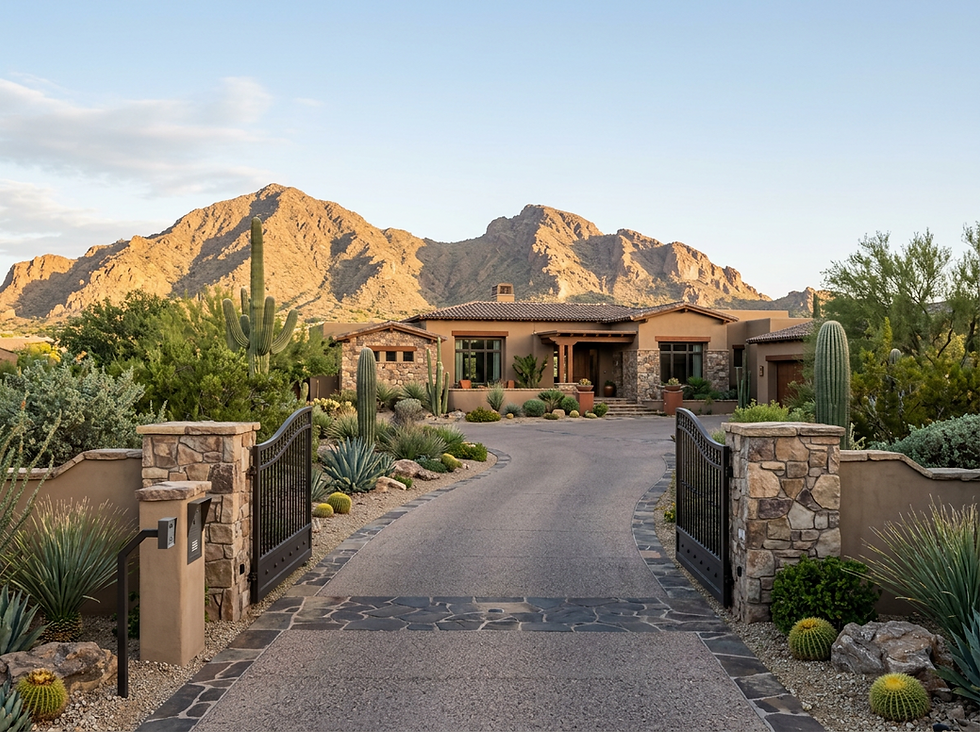
A gated enclave usually offers a different kind of certainty. Roads, entry points, landscaping standards, exterior design rules, and community amenities are often established. For some buyers, that structure is the appeal.
The tradeoff is that the community documents may limit the changes a buyer can make after closing.
That can matter for a move-in ready estate and even more for a home that needs renovation. A buyer may plan to modernize the façade, expand the garage, add a guest casita, install solar panels, revise landscaping, build a pool pavilion, change roof materials, or add privacy walls. Inside some communities, those changes may require board or architectural review approval before work starts.
Approval can depend on written guidelines, past precedent, committee discretion, neighbor notice, meeting schedules, and contractor requirements.
A gated community may also have rules beyond architecture, such as:
Rental limits
Guest access procedures
Vehicle and parking restrictions
Pet rules
Landscaping requirements
Construction work hours
Delivery rules
Club or amenity obligations
Transfer fees or capital contributions, where allowed by governing documents
The concern is not only whether the buyer likes the community. It is whether the community’s rules allow the buyer’s intended life at the property.
Questions to ask the community board before relying on a gated home
Start with the recorded governing documents, then ask the association or management company direct questions. A real estate agent, attorney, or HOA document reviewer can help interpret the materials.
Which documents control the property?
Ask for the full set of current documents, not only a summary.
Review or request:
Declaration or CC&Rs
Bylaws
Rules and regulations
Architectural guidelines
Design review application forms
Fee schedules
Meeting calendars
Recent amendments
Community standards for landscaping, lighting, fencing, roofing, and exterior materials
If the seller mentions that “everyone does it,” still verify. Informal neighborhood habits do not override controlling documents.
What changes require approval?
Ask about the exact improvements being considered.
For example:
Would a room addition require architectural board approval?
Are exterior paint colors limited to an approved palette?
Can driveway materials be changed?
Are privacy hedges, walls, or gates restricted?
Are pool houses, outdoor kitchens, or guest structures allowed?
Are solar panels, generators, or backup power equipment regulated?
Are tree removal, grading, or landscape redesigns reviewed?
Are there limits on construction staging, dumpsters, deliveries, or contractor access?
A luxury renovation can be delayed when design review is treated as an afterthought.
How does the approval process actually work?
The written rule is only part of the answer. The process matters.
Ask:
How often does the architectural committee meet?
Is approval possible between meetings, or only during scheduled sessions?
What drawings, materials, contractor documents, or deposits are required?
Are neighbor notices required?
Can conditional approval be granted?
What are the appeal rights if the committee denies a request?
How long are approvals valid?
Do approved plans need separate municipal permits?
A community approval does not replace building permits. It usually sits beside them.
The escrow officer connects the approval risk to the closing calendar
The escrow officer does not decide environmental or board approvals. Their role is different. They help coordinate the closing process, track deadlines, handle title and escrow instructions, and flag documents that must be satisfied before funds and title transfer.
That makes escrow a key place to test whether the approval path matches the contract.
For both riverfront and gated properties, approval questions can collide with:
Inspection periods
Due diligence deadlines
Financing contingencies
Appraisal timing
Title review periods
HOA document review periods
Survey delivery dates
Permit research windows
Deposit release terms
Closing extensions
If the buyer needs third-party permission before feeling comfortable, the purchase contract should reflect that need. The right legal and real estate professionals can help structure the offer.

Questions to ask the escrow officer before the approval path gets expensive
The escrow officer can clarify what documents are in the file, what deadlines govern the transaction, and what must happen before closing. Legal advice should come from an attorney, but escrow can help identify the mechanics.
What title items could affect the plan?
Ask whether the title commitment or preliminary title report shows recorded matters that need review.
Key items may include:
Utility easements
Drainage easements
Conservation easements
Access easements
Dock, riparian, or shoreline-related reservations
Private road agreements
Maintenance obligations
HOA covenants and restrictions
Setback agreements
Shared driveway or gate access rights
For riverfront land, easements may affect where structures, utilities, or access roads can go. For gated homes, covenants and architectural restrictions may control use and exterior changes.
What deadlines protect the buyer’s decision?
Ask how the contract handles review periods.
Useful questions include:
When does the inspection or due diligence period expire?
Is there a separate HOA document review period?
When must title objections be submitted?
When is the survey due?
Can environmental review be completed before the buyer’s right to cancel ends?
Can board feedback be obtained before deposits become nonrefundable?
What happens if a permit answer or HOA approval is still pending near closing?
The goal is not to make escrow solve the risk. The goal is to prevent a deadline from passing before the risk is understood.
What should be delivered before closing?
Ask which documents should be in the file and who is responsible for providing them.
For a riverfront parcel, that might include surveys, prior permits, dock approvals, elevation certificates, environmental reports, or agency correspondence.
For a gated enclave, that might include resale certificates, estoppel letters, HOA financial disclosures, governing documents, architectural approvals, violation letters, or confirmation that assessments are current.
The exact list varies by state and contract. Verify it locally.
Use a simple approval map before narrowing the market
Before touring a long list of properties, create a short approval map for each serious option. It does not need to be complicated. It needs to be honest.
Decision point | Riverfront parcel | Gated enclave home |
Primary outside reviewer | Environmental or shoreline authority | HOA, board, or architectural committee |
Biggest early uncertainty | Buildable area and permit conditions | Design approval and community restrictions |
Documents to review first | Survey, title, flood data, environmental records, prior permits | CC&Rs, architectural rules, HOA disclosures, title, violation history |
Timeline question | Can agency guidance arrive before key contract deadlines? | Can board feedback arrive before key contract deadlines? |
Renovation impact | Site work, dock work, clearing, drainage, and setbacks may be limited | Exterior design, additions, landscaping, and access rules may be limited |
This map helps separate emotional preference from approval risk.
If the must-have is a custom estate close to the river, the environmental path should be reviewed before the gated option is dismissed. If the must-have is a controlled setting with a predictable look and shared amenities, the board process should be reviewed before assuming the home can be changed freely.
The better choice is the one whose permission path fits the plan
A riverfront lot may be the better fit when the buyer values land, privacy, and water connection enough to work through environmental review. It can be a strong choice when the desired improvements match the site’s constraints, the title is clean enough for the intended use, and the permitting timeline can be managed before or after closing.
A gated enclave may be the better fit when the buyer values order, security features, community standards, and a more defined setting. It can be a strong choice when the governing documents support the intended lifestyle and renovations, and the board process is clear enough to avoid surprises.
Neither option is automatically easier. The approval risk simply sits in a different place.

The practical next step is to ask permission questions before ranking properties
Before deciding which homes belong on the short list, ask three groups of people three different sets of questions.
Ask the environmental agency or local permitting professional what the riverfront site allows.
Ask the community board or HOA manager what the gated enclave permits.
Ask the escrow officer how title, document delivery, and contract deadlines affect the buyer’s ability to verify both.
That sequence turns a lifestyle comparison into a clear purchase strategy. The right property is not only the one with the better view, gate, dock, or entry drive. It is the one where the third-party permission path supports the way the property will actually be used.
Own Luxury Homes® — America’s Luxury Network for fine homes, luxury properties, and significant $1M+ home decisions across the United States.
Our local real estate agents help buyers and sellers in your market.
Phone: 407-900-7030

Comments