Selling a Back Bay Home: Renovation Approvals and Records to Review Before Listing

Own Luxury Homes® Perspective
Before spending on a Back Bay home you plan to sell, separate three questions: what work the property needs, what approvals that work requires and what the existing records actually support. A polished exterior cannot replace an approval file. An old approval cannot establish that the work was completed as authorized or that the feature remains in good condition today.

Confirm the address and review authority first
Boston’s Back Bay Architectural District guidance directs owners to check the district map and applicable standards. Begin with the exact address rather than treating a neighborhood description, architectural style or mailing label as proof of the property’s designation. Confirm any additional property-specific restrictions with the responsible staff and your advisers.
Identify what you are selling as well: a whole building or a condominium unit. For a unit, ask the association and your attorney which exterior features are common elements, who maintains them and who has authority to request or undertake work. Do not commit to replacing a shared window, railing, roof feature or masonry element solely because it is beside your unit.
Do not turn curb appeal into unapproved exterior work
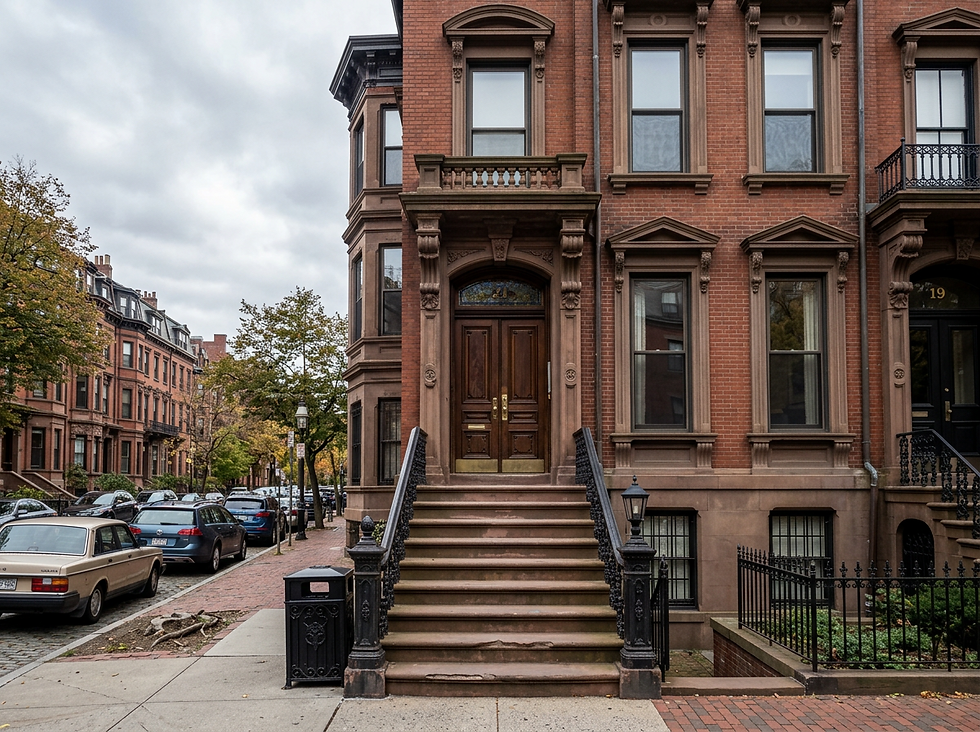
The city states that all proposed exterior work in the Back Bay Architectural District is subject to commission review and that a Design Approval Application must be approved before exterior work begins. It also advises owners not to begin work or buy materials before receiving confirmation of approval. Describe the actual scope to staff early, including repairs, replacement materials and any mechanical work affecting the exterior.
An administrative review item is not permission to start immediately. Boston’s common questions explain that administrative-review applicants do not have to appear at the hearing but must still await the commission’s decision. Do not assume a small job, matching replacement or contractor’s assurance eliminates that step.
Boston Landmarks Commission common questions also explain that an emergency repair may be expedited at a preservation planner’s discretion, with supporting evidence. An urgent condition calls for prompt professional and agency contact—not an assumption that normal approval questions disappear.
Keep design approval and building permits in separate columns
The district’s published sequence says that, once the commission rules on an application, a decision letter is emailed. If approved, the owner uses that letter to obtain the building permit with the building department and displays the approval placard during the project. Architectural approval and a building permit therefore answer different questions. Neither document alone establishes present condition.
Boston’s historical permit-record instructions provide separate routes for document images and data on permits issued after December 15, 2009. Current application status uses Permit Finder. The city says building plans must be viewed in person in its document room. A quick search of one database is not the entire property file.
Start with the property address and ask Inspectional Services for help when a record cannot be found. Record the search route, project dates and missing items. “Not located in this search” is more accurate than “no permit was required,” “the work was illegal” or “everything is approved.” Have the responsible agency and qualified professionals resolve what the gap means.
Build a work-by-work seller records worksheet
Create one entry for each meaningful alteration or repair rather than a folder labeled renovation. Windows, masonry, roof changes, exterior equipment, railings and other work may have different dates, contractors and approval histories. Use the following fields for every entry:
Work and location: What changed, where, when and who performed it? Separate seller recollection from documents.
Architectural decision: Application reference, dated decision, approved scope, drawings and conditions. Mark missing or unclear items as unresolved.
Permit evidence: Applicable building or trade permit, stated scope, available inspections and completion records. Ask which documents are relevant to that specific work.
Built result: Available photographs, invoices and professional observations. Does the work appear to match the approved details, or does that require further review?
Current condition: Maintenance history and any inspection findings. Keep condition questions separate from historical authorization.
Next action: Missing evidence, responsible agency or adviser, expected follow-up and the listing decision affected.
Keep original documents and dates attached to the worksheet. An invoice supports that a contractor billed for a scope; it does not certify commission approval. A decision letter supports the decision it records; it does not certify every later field change. An inspection report supports its stated scope and access limitations, not an unlimited warranty.
A hypothetical window example: approved is not the same as verified
Imagine an owner preparing to sell after a previous window replacement. The file contains a commission letter describing one window configuration and a contractor invoice saying replacement windows. The seller does not yet have enough information to establish that the installed units match the approved scope. This is an invented example, not an actual Back Bay property or violation finding.
The next step is to obtain the referenced drawings and relevant permit records, then ask the appropriate professionals and staff to clarify any apparent mismatch. Keep the status as unresolved until the evidence supports a conclusion. Do not advertise the work as fully approved merely because a letter exists, and do not label it a violation solely because the seller’s folder is incomplete.
Boston’s common questions identify work completed without consent or outside the approved scope as reasons for a violation. For an actual notice, the city directs the owner to contact the issuing staff person. Do not promise that a retrospective application will be approved, that a buyer can simply assume the issue or that payment to a contractor closes it.
Choose preparation work after the record review
Investigate: Address unexplained water entry, deterioration, inconsistent records or an actual notice with the appropriate specialists before treating the issue as presentation work.
Prepare: Define cleaning, decluttering and other proposed presentation tasks. Verify the approval path for exterior scope rather than assuming curb-appeal work is exempt.
Evaluate optional changes: Compare the written cost, required approvals and realistic schedule with property-specific sale evidence. A replacement is not automatically necessary because you are selling.
Revisit the launch calendar: If essential work or clarification is unresolved, discuss pricing, description, disclosures and timing with your agent and Massachusetts attorney. Do not build the listing plan around a guaranteed hearing outcome.
The district page says only complete applications are added to a public hearing agenda and staff cannot review completeness immediately upon submission. Work backward from your intended photography and listing dates, allowing for document retrieval and questions—not an invented standard approval period. A neighbor’s project is supplementary context, not a promise that yours will receive the same decision.
Before listing, have your attorney and real estate professional identify the sale-specific disclosures, inspection procedures and contract terms that apply. This is a renovation-records guide, not a complete Massachusetts seller-disclosure or inspection-law checklist. Organized records support accurate answers; they do not replace those obligations or guarantee a sale.
Our Back Bay plumbing guide addresses a separate replacement-versus-monitoring decision. This seller guide concerns the approval and documentation trail, not a diagnosis of a building’s systems.
Discuss your Back Bay selling plans before committing to improvements
Contact Own Luxury Homes® with the property address, whether you own a whole building or a condominium, your intended selling timeline and the work or records question you need to resolve. Begin with the decision before spending on exterior changes or making broad renovation claims. Do not send account information or sensitive financial documents through an ordinary inquiry.
Own Luxury Homes® is America’s Luxury Network. Florida real estate services are provided by Own Luxury Homes LLC. In other states, real estate services are provided through independent local brokerages and appropriately licensed professionals. Brokerage relationships, service availability and required disclosures vary by location. This article provides general information, not legal, architectural, engineering, construction or tax advice for a specific property.
Own Luxury Homes® is America’s Luxury Network for fine homes and luxury properties—where every client is treated like a million-dollar client.
Comments