
Summerlake or Nearby Communities Which Winter Garden Home Fits Your Lifestyle

Choosing Summerlake over another Horizon West community is not just a map decision. The address may look right, the home may photograph well, and the drive to Walt Disney World may be convenient, but the ownership experience is shaped by quieter details: school routes, HOA rules, design approvals, amenity access, yard maintenance, rental limits, parking rules, and what happens when you want to add a pool, fence, outdoor kitchen, or generator.
Summerlake sits within the broader Winter Garden and Horizon West conversation, where buyers often compare several newer master-planned communities before deciding. The best choice is rarely the one with the flashiest entrance. It is the one that fits how the household will actually live on a Tuesday morning, a rainy summer afternoon, and five years from now.
This guide gives a practical way to compare the Summerlake neighborhood Winter Garden Florida buyers often shortlist with nearby Horizon West options, without relying on generic community rankings or assumptions.

Start with the life you are trying to make easier
Before comparing floor plans, write down the daily routines the home needs to support. This step sounds basic, but it prevents a common mistake: buying the prettiest house in the least convenient daily pattern.
A Summerlake home may appeal because of its location in the Horizon West area, newer community feel, and proximity to major destinations in southwest Orange County. Nearby communities may offer different lot types, school routes, amenity packages, architectural styles, or HOA expectations. Those differences matter more than a few minutes on a map.
Build the comparison around actual use:
Where does the morning commute start and end?
Which roads would be used during school drop-off hours?
How often would the household use community amenities?
Is a larger yard more important than a newer amenity center?
Will guests need easy parking?
Is future outdoor living space part of the plan?
Are short-term or long-term rental restrictions relevant?
Would gated access, less traffic, or walkability change the decision?
The goal is to compare ownership fit, not just community appeal.
Compare routes before comparing finishes
In Horizon West, two homes that look equally convenient online can feel very different once real routes are tested. A map search may show distance, but it will not always show the friction of school traffic, event-area congestion, construction, turn lanes, or the difference between a direct route and a route that looks short but feels slow.
For Summerlake and nearby communities, compare routes to the places that will shape normal life:
Work locations
Schools and childcare
Grocery stores and pharmacy stops
Medical offices
Fitness or youth sports locations
Orlando International Airport access
Walt Disney World as a nearby location point
Downtown Winter Garden or other preferred dining areas
Major highways used most often
Do this at the times that matter. A 10-minute midafternoon drive may not reflect a school morning. A weekend route may not match a weekday commute. If the home is being considered as a second home or seasonal property, test holiday and peak travel patterns when possible.
Practical route test
Pick the top two or three homes and run the same route checks for each. Use the same day and time when comparing.
Route to test | Why it matters |
Morning school or work route | Shows daily friction that listing maps can hide |
Evening return route | Reveals congestion patterns after work and activities |
Grocery and errand loop | Shows whether daily needs are simple or scattered |
Airport route | Matters for frequent travelers and second-home owners |
Guest arrival route | Helps assess how easy the home is for family and visitors |
Also look at the road immediately around the property. A home close to an entrance can be convenient, but it may also see more pass-through traffic. A home deeper in the community may feel quieter, but add minutes to each trip. Neither is automatically better. The question is which tradeoff fits.
Understand where Summerlake sits in the Horizon West picture
Horizon West is a planned area in southwest Orange County. Orange County materials describe it as a special planning area organized around villages and mixed-use centers. That planning context helps explain why communities can feel related but still differ in layout, amenity style, street pattern, and commercial access.
Summerlake is one of the communities buyers often evaluate when looking in the Winter Garden and Horizon West area. Nearby options may include other master-planned neighborhoods with their own associations, amenity packages, builders, design standards, and maintenance models.
That means the right comparison is not simply Summerlake versus “somewhere else.” It is:
This exact home
This exact lot
This exact HOA or community association
This exact commute pattern
This exact set of restrictions
This exact long-term plan
A neighboring community can have a similar location yet a different ownership experience. Even within the same community, one property may have a conservation view, another may back to a road, another may have stricter improvement limits because of lot conditions, easements, or association rules.
Buyers should verify current facts through official and professional sources, including Orange County, the City of Winter Garden where applicable, the Orange County Property Appraiser, recorded documents, the applicable HOA or management company, inspectors, surveyors, lenders, insurance professionals, and qualified real estate counsel.

Compare amenities by use, cost, and responsibility
Amenity lists can blur together. Pool. Clubhouse. Fitness center. Trails. Parks. Sports courts. Playgrounds. The better question is not which list is longer. The better question is which amenities will be used often enough to justify the dues, rules, and maintenance model.
When comparing Summerlake with nearby Horizon West communities, separate the amenities into three groups.
Amenities used every week
These have the greatest lifestyle value. If a household will use the pool, walking paths, fitness center, playground, dog areas, or community parks several times a week, proximity and quality matter.
Look at:
Walking distance from the home
Parking availability near major amenities
Hours of use
Guest policies
Rules for private events
Condition and upkeep
Shade, seating, lighting, and restroom access
An amenity at the far end of a community may not function like a daily amenity. It may feel more like an occasional destination.
Amenities used occasionally
These may still add value, but they should not drive the decision unless they directly fit the household. A clubhouse that looks impressive may matter less than a small pocket park near the home if the household walks every evening.
Ask how often the feature would be used in real life. If the answer is once or twice a year, do not let it outweigh commute, lot, floor plan, or restrictions.
Amenities that create obligations
Amenities come with responsibilities. Community pools, landscaping, gates, trails, common areas, and stormwater features all require funding and management. HOA dues and assessments reflect maintenance needs, reserves, insurance, vendor contracts, and association decisions.
Buyers should review current budget documents, reserve information when available, meeting minutes, rules, and any notices of pending projects or assessment discussions. If documents are unclear, ask the association or management company direct questions before the inspection period ends.
Review HOA documents before falling in love with the house
HOA rules can shape daily ownership more than many buyers expect. They may affect exterior colors, fencing, landscaping, parking, pets, leasing, architectural changes, holiday decor, lake or pond access, waste containers, signage, and visible storage.
Do not rely on a casual summary. Read the governing documents.
Key documents to request and review include:
Declaration of covenants, conditions, and restrictions
Bylaws and articles, if applicable
Rules and regulations
Architectural or design review guidelines
Current budget
Fee schedule
Meeting minutes
Insurance information for association-maintained property
Reserve study or reserve information, if available
Estoppel information during the transaction
Any notices about violations, disputes, or upcoming assessments
Watch for design-review rules. Many master-planned communities require approval before exterior changes. That may include fences, pools, screen enclosures, paint colors, patios, driveway changes, solar equipment, landscaping, play structures, lighting, and exterior cameras. Requirements vary by association and property, so verify the current process directly with the HOA or management company.
If the buyer plans to make changes, ask these questions before closing:
Is the improvement allowed?
Is design review required?
What drawings, surveys, or contractor details must be submitted?
Are there setback, easement, drainage, or lake-buffer limits?
Does Orange County or the City of Winter Garden require permits?
How long does approval typically take?
Can work begin before written approval?
Are neighbors notified or involved?
Are there limits on materials, colors, height, or placement?
A home that seems flexible may not be flexible once recorded restrictions, easements, and design standards are applied.
Verify what the owner maintains
Maintenance responsibilities vary by property and association structure. In one community, the owner may handle most yard and exterior care. In another, the association may maintain certain landscaping, irrigation, common walls, gates, private roads, or neighborhood features. Townhomes and attached residences may have an entirely different structure from single-family homes.
Do not assume.
Review the documents and ask for written clarification on:
Lawn and landscape maintenance
Irrigation system responsibility
Roof responsibility, especially for attached homes
Exterior paint and repair standards
Fences and boundary walls
Private alleys, drives, or shared surfaces
Mail kiosks and neighborhood lighting
Stormwater ponds and drainage areas
Tree trimming or removal rules
Pest control responsibility in attached properties
Trash and recycling procedures
Maintenance responsibility affects both cost and control. Some buyers prefer association-managed exterior care because it reduces routine work. Others prefer more control over landscaping and timing. The right answer depends on how the property will be used and how much control the owner wants.
Check property-specific restrictions, not just community rules
A common mistake is reviewing only the community overview. The individual lot may carry restrictions or conditions that matter more than the neighborhood brochure.
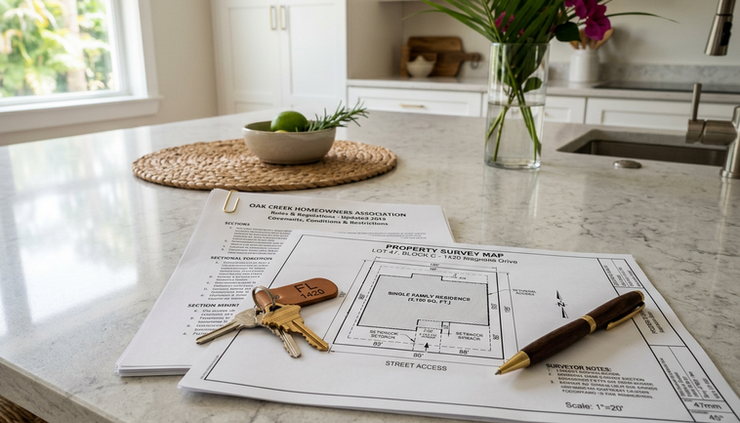
For each serious home, review the property record, survey, title commitment, recorded plat, HOA documents, and seller disclosures with the right professionals. This is especially important if the buyer wants to add or change anything outdoors.
Property-specific items to verify include:
Easements for drainage, utilities, access, or maintenance
Conservation or wetland-related boundaries, if any
Lake, pond, or stormwater tract adjacency
Fence placement limits
Pool feasibility
Screen enclosure rules
Setbacks and building lines
Corner-lot visibility rules
Sidewalk or right-of-way conditions
Lot grading and drainage flow
Shared walls or maintenance areas
Any open permits or unpermitted improvements
Official sources can help. Orange County and the City of Winter Garden provide permitting and planning information through their departments and online tools, though boundaries and jurisdiction should be verified for the specific address. The Orange County Property Appraiser can help confirm property data and parcel information, but buyers should not treat property appraiser records as a substitute for a survey, title review, or legal advice.
For zoning or permitting, ask the appropriate local department about the exact address. For private restrictions, ask the HOA, management company, title company, and attorney. Public rules and private restrictions can both apply.
Compare homes by the way they age with you
A home should fit the first year, but it should also fit the likely next chapter. Nearby Horizon West communities may offer different home ages, builder plans, lot sizes, garage layouts, and architectural rules. A house that solves today’s wish list may become limiting if the buyer does not think ahead.
Look beyond the model-home feeling and test the plan against future scenarios.
If guests visit often
Check bedroom separation, parking rules, bathroom access, noise transfer, and whether the living area supports longer stays. Some communities limit overnight street parking or guest parking, so verify current rules before assuming guests can park easily.
If remote work matters
Look for quiet rooms, natural light, internet options, and separation from main living areas. A loft may look useful, but it may not work for calls if it is open to the kitchen or living room.
If outdoor living is part of the plan
Verify room for a pool, patio, summer kitchen, screen enclosure, fence, or expanded landscaping. Ask about setbacks, easements, HOA approval, permits, drainage, and utility locations before treating the yard as expandable.
If the home may become a rental
Do not assume leasing is allowed on the buyer’s preferred terms. Review HOA leasing rules, county or city requirements, lender terms, insurance conditions, and tax implications with professionals. Rules can differ by community and property type, and they may change under the governing documents and applicable law.
If low-maintenance living is the priority
Compare what the HOA covers, what the owner must handle, and how quickly exterior upkeep is required. Low-maintenance does not mean no responsibility. It often means responsibilities are assigned differently.
Use this side-by-side checklist before choosing
A clear comparison keeps the decision grounded. Use one line per home and fill it out with verified information, not assumptions.
Category | What to compare | What to verify |
Daily routes | Commute, school, errands, airport, Walt Disney World area access | Drive times at real-use hours |
Community feel | Street pattern, traffic, sidewalks, lighting, noise | Visit at different times of day |
Amenities | Pool, parks, trails, fitness, clubhouse, courts | Rules, access, condition, guest policy |
HOA cost and scope | Dues, reserves, assessments, maintenance coverage | Budget, minutes, estoppel, management answers |
Restrictions | Exterior changes, fencing, parking, leasing, pets | Governing documents and written HOA guidance |
Lot conditions | Easements, drainage, setbacks, views, road exposure | Survey, plat, title, public records |
Future projects | Pool, patio, solar, generator, landscaping | HOA approval and local permits |
Resale fit | Broad appeal, functional plan, condition, location | Ask a real estate professional for market context |
The strongest choice is the one that stays attractive after this checklist is complete.
What Summerlake may offer and what still needs verification
Summerlake can be compelling for buyers who want a Winter Garden address in the Horizon West area, with access to nearby shopping, schools, recreation, and major southwest Orlando destinations. Its appeal often comes from a combination of location, community planning, and the lifestyle expectations many buyers associate with newer master-planned neighborhoods.
Still, no community should be chosen from reputation alone.
For Summerlake, verify:
Current HOA dues and what they cover
Amenity access and condition
Architectural review requirements
Parking rules
Leasing restrictions
Pet and fencing rules
Any pending assessments or major projects
Lot-specific easements and improvement limits
Whether the address falls under Orange County or City of Winter Garden jurisdiction for specific services or permitting
School zoning through the official school district source for the address
For nearby Horizon West communities, use the same list. A different community may offer a better fit if it has the right route pattern, lower-maintenance structure, larger lot, preferred amenities, or fewer conflicts with planned improvements.

The practical way to make the final call
Once the top homes are narrowed down, rank them in three ways.
Best daily life
This is the home with the easiest normal week. Routes work. Errands are simple. The floor plan supports real routines. The location within the community feels right.
Best ownership structure
This is the home with HOA rules, maintenance responsibilities, dues, and design standards that match the buyer’s expectations. It does not create friction around parking, pets, guests, outdoor projects, or leasing plans.
Best long-term fit
This is the home that can grow with the owner’s plans. It has enough flexibility, or enough certainty, to avoid regret.
If one home wins all three, the decision is likely clear. If Summerlake wins on location but another Horizon West community wins on restrictions or lot flexibility, pause before choosing. If another community has the preferred amenities but Summerlake has the better daily route, decide which advantage will matter more over time.
A polished listing can create urgency. A strong due diligence process creates confidence.
This guide is informational only and should not replace professional advice. Buyers should verify all community rules, public requirements, permits, zoning, taxes, insurance, school assignments, and property conditions with the appropriate professionals and official sources before making a decision.
Own Luxury Homes® — America’s Luxury Network for fine homes, luxury properties, and significant $1M+ home decisions across the United States.
Contact Ryan for Disney-area Real Estate Phone: 407-900-7030 Email: ryan@ownluxuryhomes.com
Contact Ryan for Disney-area commun


Comments