
Downtown Winter Garden or a Gated Community What to Check First for a Winter Garden FL Downtown Home Near Disney

Choosing between downtown Winter Garden and a gated community is really a choice between two ownership styles. A downtown home usually asks you to pay closer attention to walkability, parking, events, older-home conditions, and city rules. A gated neighborhood usually asks you to study association control, gate access, architectural standards, and recurring obligations.
Both can be excellent fits. The first check is not which one feels more charming at the showing. The first check is which set of rules, sounds, routines, and responsibilities you are willing to live with after closing.
This guide is written as a practical checklist for comparing a Winter Garden FL downtown home near Disney with homes in gated communities in and around Winter Garden. Walt Disney World is referenced only as a nearby regional location, not as an endorsement or affiliation.

Start with the ownership question, not the home style
A downtown property and a gated-community property can look similar on paper. Both may offer attractive architecture, updated interiors, and convenient access to Central Florida destinations. The day-to-day experience can be very different.
Use this first filter before comparing finishes or square footage.
Downtown Winter Garden may fit if
You want to walk to local dining, shops, events, and the West Orange Trail area. You are comfortable with a more public setting, street activity, and a mix of residential and commercial uses nearby.
A gated community may fit if
You value controlled access, private amenities, consistent neighborhood standards, and a more inward-facing residential setting. You are comfortable with HOA documents and architectural review.
The buyer mistake is treating the decision as “character versus privacy.” That is too simple. The better question is:
Which environment gives you more of what you actually want, and which tradeoffs will still feel acceptable in three years?
Confirm the exact location before you assign a lifestyle to it
“Downtown Winter Garden” can mean different things in casual conversation. Before relying on a listing description, verify the property’s location on an official city map or parcel resource and compare it with the places you expect to use.
The City of Winter Garden’s official materials identify Historic Downtown Winter Garden around Plant Street, and the city’s downtown information points visitors to the downtown district and local events. Main downtown references commonly center on Plant Street, with nearby streets such as Dillard Street and Main Street appearing in downtown maps, business listings, or navigation references. Verify the exact block and walking route for any property you are considering.
For local context, downtown dining and food destinations shown on named live sources include:
The Chef’s Table at the Edgewater
Source to verify: The Chef’s Table at the Edgewater official website and the City of Winter Garden downtown business resources.
Market to Table
Source to verify: Market to Table official website and downtown Winter Garden business listings.
Plant Street Market
Source to verify: Plant Street Market official website and City of Winter Garden downtown visitor resources.
These details are useful for orientation, but they should not replace your own route test. Walk from the home to the places that matter to you. Do it at the time of day you would actually go.
Check all of the following:
How long the walk feels in summer heat
Whether sidewalks, crossings, lighting, and traffic patterns feel comfortable
Whether parking pressure changes at dinner time or during events
Whether the home is close enough to enjoy downtown, but far enough for your preferred quiet level
Check city rules before assuming you can change the property
For downtown homes, the most important ownership questions often involve what you can repair, replace, expand, or alter.
Do not rely on assumptions such as “it is my house, so I can change the exterior” or “older homes are exempt.” In many cities, work may require permits, zoning review, design review, or approval tied to a district or overlay. The exact requirement depends on the property, the scope of work, and the city’s current rules.
For Winter Garden, start with official sources, including:
The City of Winter Garden Community Development Department
The city’s official Planning and Zoning resources
The city’s official Building Division or permitting resources
The city’s official zoning map or code resources, if linked by the city
Before going under contract, ask the right questions in writing:
Is the property located in a historic district, downtown district, overlay district, or special planning area?
Are exterior changes subject to design review, architectural guidelines, or city approval?
Would replacing windows, roofing, doors, fencing, porches, driveways, or exterior materials require permits or extra review?
Are additions, accessory structures, garage changes, or short-term rental uses restricted by zoning or other local rules?
Are there open permits, expired permits, code cases, or unpermitted improvements?
This is not legal advice. It is a due-diligence framework. Verify the property with the City of Winter Garden, a qualified real estate attorney, a licensed contractor, and other professionals before making decisions.

For a downtown home, study noise before you study finishes
Downtown energy can be a benefit. It can also be the thing that surprises a buyer after closing.
Winter Garden is known regionally for its downtown events and public gathering areas, and the city maintains official event and downtown information online. If a home is close to the downtown core, event noise, restaurant activity, music, traffic, delivery trucks, and pedestrian movement deserve careful review.
Do not ask only whether the street is quiet during a weekday showing. Test the property during real-world conditions.
Visit at these times if possible:
Friday evening
Saturday morning
Saturday evening
A day when a city event is scheduled nearby
A normal weekday morning when deliveries and commuter traffic may be present
Stand outside the home for several minutes. Then sit inside with the air conditioning off if practical. Listen for voices, amplified sound, engines, motorcycles, service vehicles, and crowd movement.
Also check:
Nearby public parking areas
Restaurant patios or service areas
Trash pickup locations
Alley access
Cut-through driving patterns
Train, trail, or intersection activity if relevant to the specific home
A buyer who wants downtown access may be happy with the extra activity. A buyer who wants a quiet retreat should define that need early.
For a gated community, read the HOA documents before you fall in love
Gated neighborhoods often offer a more controlled setting, but that control comes from recorded documents and association rules. Those documents matter as much as the floor plan.
Before making a final decision, request and review the current HOA or community association documents. These may include covenants, conditions and restrictions, bylaws, rules and regulations, architectural guidelines, budgets, meeting minutes, reserve information, insurance summaries, and fee schedules.
Pay close attention to:
Exterior paint, roofing, landscaping, fences, lighting, and driveway standards
Rules for additions, pools, screen enclosures, generators, solar panels, and outdoor kitchens
Vehicle, trailer, RV, boat, and guest parking rules
Pet rules
Rental restrictions
Amenity rules and guest policies
Fine policies and enforcement history
Capital projects or possible special assessments
Transfer fees, application fees, and approval timelines
Do not treat an HOA as a minor afterthought. In some communities, architectural rules can shape what the home looks like and how quickly projects can begin. In others, gate and amenity systems can affect daily routines more than expected.
Have a qualified professional review the documents if you are unsure how to interpret them.
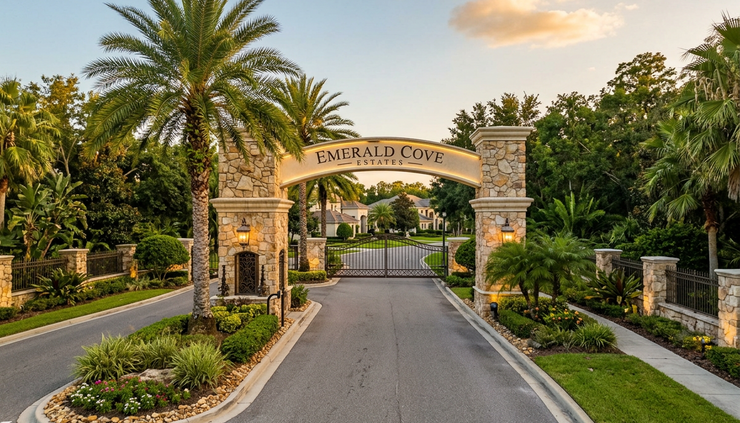
Gates and access deserve their own checklist
A gated entrance can feel like a simple benefit during a tour. Day to day, it is an operating system. Make sure it works for your household, guests, vendors, and emergency needs.
Ask the association, listing representative, or property manager these questions:
Is the gate staffed, virtual, keypad-controlled, transponder-based, app-based, or a combination?
How do residents add guests, vendors, rideshare drivers, food delivery drivers, and service providers?
Are there limits on guest entry hours?
What happens when the gate malfunctions?
How are emergency vehicles handled?
Are there separate resident and visitor lanes?
Are gate repairs funded through regular dues or separate charges?
Does the community have rules for open houses, showings, contractors, or moving trucks?
Then test the reality. Drive through at school pickup time, evening arrival time, and a weekend peak period if possible. A beautiful gate with routine backups may not match the smooth experience buyers imagine.
Compare parking with real life in mind
Parking is one of the clearest differences between downtown and gated-community living.
A downtown home may have a driveway, garage, alley access, street parking, or a tighter parking arrangement. Nearby public parking may help for dining and events, but it may not solve everyday owner needs. Verify what belongs to the property and what is public.
For a downtown property, check:
Deeded parking, driveway dimensions, garage usability, and alley conditions
Street parking rules and posted restrictions
Whether visitors can park comfortably during events
Whether service vehicles can access the property
Whether golf carts, if relevant, are permitted and where they can be parked or charged, subject to local rules
For a gated community, check:
How many vehicles can be parked in the driveway
Whether overnight street parking is allowed
Whether guest parking exists near the home
Rules for commercial vehicles, boats, trailers, and recreational vehicles
Whether garage storage creates a practical parking issue
A large home with strict parking rules can feel smaller in practice. A downtown home with flexible access can feel easier than expected. The answer comes from the property details, not the label.
Match the home’s maintenance profile to your tolerance
Downtown homes and gated-community homes may ask for different kinds of maintenance.
A downtown or older home may require closer review of structure, drainage, roof age, windows, electrical systems, plumbing, termite history, tree canopy, and prior renovations. The charm can be real, but so can the need for careful inspections.
A newer gated-community home may shift attention toward builder history, drainage, roof condition, stucco or exterior finish, mechanical systems, pool equipment, HOA-maintained areas, and warranty status if applicable.
Build a due-diligence team before deadlines matter:
Licensed home inspector
Wood-destroying organism inspector
Roofing contractor when needed
HVAC, plumbing, or electrical specialists when inspection findings call for them
Land surveyor when boundaries, fences, encroachments, or easements matter
Real estate attorney when documents or use questions need legal review
Insurance professional before the inspection period ends
For either option, ask for seller disclosures, permit history where available, association documents where applicable, and any known repair records.
Decide how much control you want over your surroundings
This is the emotional center of the decision.
Downtown living usually offers more connection to the public realm. You may be closer to restaurants, trails, shops, and events. You may also accept more public activity near your front door.
Gated-community living usually offers more private neighborhood structure. You may gain controlled access, amenities, consistent streetscapes, and association-managed standards. You may also accept more private rules over your home and lot.
Neither is automatically better. They answer different needs.
Ask yourself:
Do I want to walk out the door and be near activity, or do I want activity separated from home?
Do I prefer city rules only, or am I comfortable with city rules plus HOA rules?
Would I rather manage event noise or association enforcement?
Do I value a distinctive older-home setting or a more uniform neighborhood plan?
Do I expect to renovate, expand, rent, host often, or keep multiple vehicles?
The best choice is the one where the tradeoffs still feel reasonable after the excitement of the purchase fades.

A simple first-check checklist
Use this before comparing individual homes.
Check | Downtown Winter Garden | Gated community |
Rules | Verify zoning, permits, any district or design-review issue with official city sources | Review HOA documents, architectural rules, budgets, fees, and enforcement |
Access | Test walkability, parking, event-day access, and service access | Test gate entry, guest systems, vendor access, and peak-time backups |
Sound | Visit during evenings, weekends, and city events | Check road noise, amenity noise, gate traffic, and neighbor proximity |
Renovations | Confirm permits and approval paths before assuming changes are allowed | Confirm HOA architectural approval before planning exterior work |
Lifestyle | More public, walkable, and connected to downtown activity | More private, controlled, and association-managed |
Professional review | City staff, inspector, contractor, attorney when needed | HOA manager, inspector, attorney, insurance professional when needed |
The practical way to choose
Do not start with the prettiest kitchen. Start with the operating conditions around the home.
For a downtown Winter Garden property, verify location, walkability, parking, event exposure, permit history, zoning, and any design-review concerns through official city sources and qualified professionals.
For a gated community, verify the association documents, gate operation, architectural rules, parking limits, fee obligations, reserves, and approval timelines before removing contingencies.
The right home is not just the one that looks best online. It is the one whose rules, routines, sound level, access, and maintenance profile fit the way ownership will actually feel.
Own Luxury Homes® — America’s Luxury Network for fine homes, luxury properties, and significant $1M+ home decisions across the United States.
Contact Ryan to discuss your Florida property and buying or selling goals.
Phone: 407-900-7030
Email: ryan@ownluxuryhomes.com


Comments