Buying in the Slowest Market Since 2010: What the 7.11% Mortgage Rate Means for You

OWN LUXURY HOMES® — PERSPECTIVE
A National Perspective on Real Estate, Property, and the Decisions That Matter.
By Ryan Brown, Founder & Principal Broker, Own Luxury Homes®
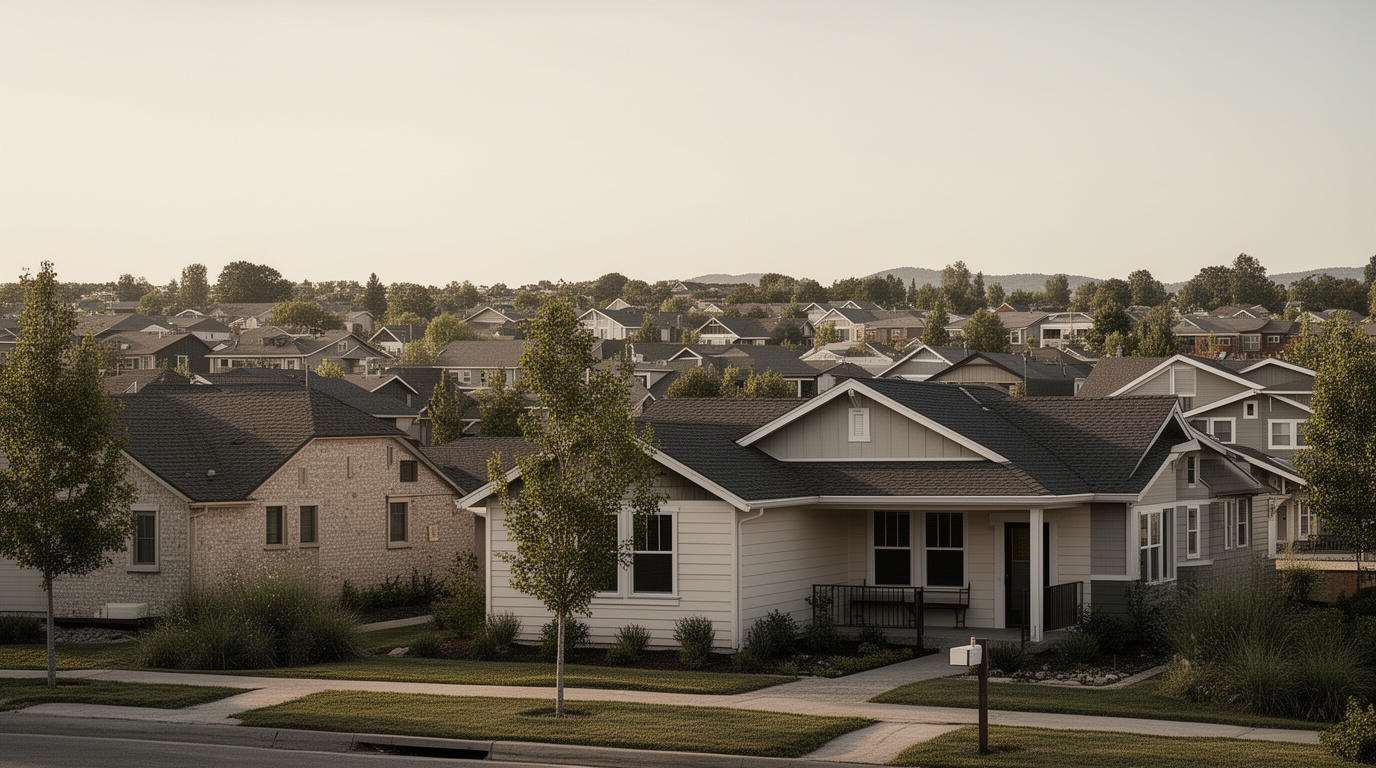
Illustrative editorial image: a representative home, not an actual listing.
October was the slowest month for existing-home sales in more than 16 years. For a buyer, that is not a reason to wait for the market to decide for you. It is a reason to buy with more care — and, for the first time in a long while, with a little more room to choose.
This is the national picture, and it matters in every market we serve. Own Luxury Homes® exists to bring that national perspective together with the details of each property and local market — a more considered approach to real estate, where every client is treated like a million-dollar client, because luxury is a level of care, not a minimum price.
The numbers in this article come from the National Association of REALTORS® October 2026 Existing-Home Sales report, released November 12, and Freddie Mac's Primary Mortgage Market Survey. They are the latest official figures available as of this writing. Read the NAR October report.
The headline number: existing-home sales fell 5.5% in October to a seasonally adjusted annual rate of 3.75 million — down 8.8% from a year earlier and the slowest pace since August 2010. Get a buying plan for this market — a property-specific read on the homes, the price, and the buyers competing near you.
The Headline Number for Buyers
Fewer closings does not mean falling prices. The national median existing-home price was $416,700 in October, up 0.4% from $414,900 a year earlier — the 40th consecutive month of year-over-year price increases. The single-family median was $421,900; condominiums and co-ops came in at $365,100.
Inventory is rising, but slowly. Total housing inventory stood at 1.59 million units in October, a 5.1-month supply — up from 4.7 months in September and 4.4 months a year earlier. Homes spent a median of 35 days on the market, up from 33 days in September. That is more choice than buyers had a year ago, and more time to make a considered decision — but not a buyer's market by any usual measure. A balanced market is generally considered to be around six months of supply.
Prices have not fallen nationally because supply, while rising, is still limited — and because most homeowners are not under pressure to sell. Distressed sales were just 2% of transactions in October. As NAR Chief Economist Lawrence Yun put it, the nation's 88 million homeowners are “largely in a comfortable financial position due to sizable housing wealth accumulation.”
What 7.11% Actually Costs
The binding constraint is the cost of borrowing. The average 30-year fixed-rate mortgage was 7.33% in October, according to Freddie Mac, up from 6.86% in September and 6.25% a year ago. NAR's Lawrence Yun was blunt: “Home buying is difficult when mortgage rates have climbed to their highest levels since 2000, aside from a single month in 2023.”
Rates have eased since October. Freddie Mac's weekly survey put the 30-year fixed at 7.11% on November 12 — the fourth straight weekly decline, and the lowest in seven weeks. The 15-year fixed was 6.45%.
What does that move mean in dollars? Take the national median price, $416,700, with 20% down — a $333,360 loan, principal and interest only, before taxes, insurance, and any fees. At 7.33%, the October average, the payment is about $2,292 a month. At 7.11%, it is about $2,243 a month — roughly $50 a month less. At 6.25%, a year ago, the same loan would have been about $2,053 a month. So the recent decline helps, but a buyer today still pays roughly $190 a month more in principal and interest than a buyer a year ago on the same home at the same price. Those are illustrative figures from the national averages, not a quote — your rate depends on your credit, your down payment, and your lender.
That is why the rate headline alone should not decide your timing. A 7.11% rate on a well-priced home you plan to keep is a different decision from a 7.11% rate on a home priced from last year's peak. Price, condition, and how long you will stay matter at least as much as the rate on the day you lock.
More Choice, Less Competition
In a slow market, the buyers who remain are often the ones who can act. First-time buyers were 29% of October sales, down from 32% a year earlier. Cash sales were 29% of transactions. Individual investors and second-home buyers accounted for 20%, up from 16% a year earlier.
For a buyer who needs financing, that mix cuts both ways. There are fewer competing offers than in a hot market, and sellers who have been waiting are more likely to negotiate on price, repairs, or timing. At the same time, cash buyers and investors are still active — about one in five sales — so a good home, well priced, can still move quickly. The median 35 days on market is a median, not a promise: the best homes still sell faster.
If you are weighing whether to buy now or wait for rates to move, tell us about your move and we will read your market with you — property by property, not by headline.
The Market Is Not One Market
The national median hides a wide spread. In October, the Northeast median was $519,600, up 3.2% from a year earlier, with sales flat month over month. The Midwest median was $324,300, up 1.5%. The South median was $360,900, down 0.4% from a year earlier, with sales down 6.5% in the month. The West median was $624,300, unchanged from a year earlier, with sales down 9.7% in the month.
Your street, your price band, and your local inventory matter more than any national figure. That is the same discipline we applied recently to how to read your home's value in Clermont, Florida — recent sales near you, not a national average. It applies to buyers everywhere, in every price range. And if you are also selling, the other side of this market matters too: what October's numbers mean for sellers.
Five Moves for Buyers in This Market
1. Buy the payment, not the rate headline. Work out the principal and interest at today's rate, at the October average, and at a rate a little higher — and make sure the home still works if rates do not fall. If it only works at a rate you hope for, it does not work yet.
2. Price from the most recent sales, not the asking prices. In a market with a 35-day median time on market, asking prices can sit above what buyers actually paid. Your offer should rest on closed comparable sales near the home, in the same condition and price band.
3. Make condition the argument. When sellers are negotiating, the homes that win are the ones with a clean inspection story, honest disclosures, and the small repairs already done. Ask for what matters — roof, systems, water — and do not spend your leverage on cosmetic items.
4. Keep your financing ready to move. In a slow market, a buyer who can close still stands out. A pre-approval that matches your offer, proof of funds for your down payment, and a lender who answers the phone are worth more than a slightly higher offer that cannot close.
5. Plan to stay. A home bought at 7.11% is a home you may refinance later if rates fall — or a home you keep at 7.11% if they do not. Buy a home you would be glad to own for years at today's payment, not a home that only makes sense if rates drop next spring.
What Not to Do
Do not wait for a perfect rate and lose a well-priced home — in a slow market, the negotiation often starts with the buyer who is ready, not the buyer who is waiting. Do not stretch to a payment that only works if rates fall; the weeks you save by waiting are usually lost when the buyers who have been waiting return at the same time. And do not treat a national headline as your local answer. The slowest national sales pace since 2010 and a rising national median price are both true at once. Your decision should rest on what is true for the home in front of you, in your market, right now.
Begin a Conversation
Buying in this market is a decision, not a search form. If you are considering a purchase — now, or in the months ahead — Begin a Conversation. Tell us about the home and the move ahead, and we will send you a property-specific buying plan: the recent sales near you, the homes that fit your price and your timeline, and an honest read on rates, timing, and what to offer.
You can also start here: Buy a Home — see how we help buyers — or, if you are selling as well as buying, Sell a Home. If you are a real estate professional who would like to receive referrals in your market, Join the Own Luxury Homes® Network.
Sources
National Association of REALTORS®, Existing-Home Sales Decreased 5.5% in October, released November 12, 2026. Freddie Mac, Primary Mortgage Market Survey, November 12, 2026. Payment figures are the author's arithmetic from those published averages: $416,700 median price, 20% down, $333,360 loan, 30-year fixed, principal and interest only.
Own Luxury Homes® — A More Considered Approach to Real Estate. In Florida, services are provided by Own Luxury Homes LLC (FL brokerage license CQ1072948). In other states, services are provided by independently owned and operated local brokerages and licensed professionals.


Comments